
Brand Guide
Rotary Lift Pads and Replacement Parts Selection Guide
Select Rotary lift pads by exact model, mounting style, current hardware, and measurements before ordering replacement parts.
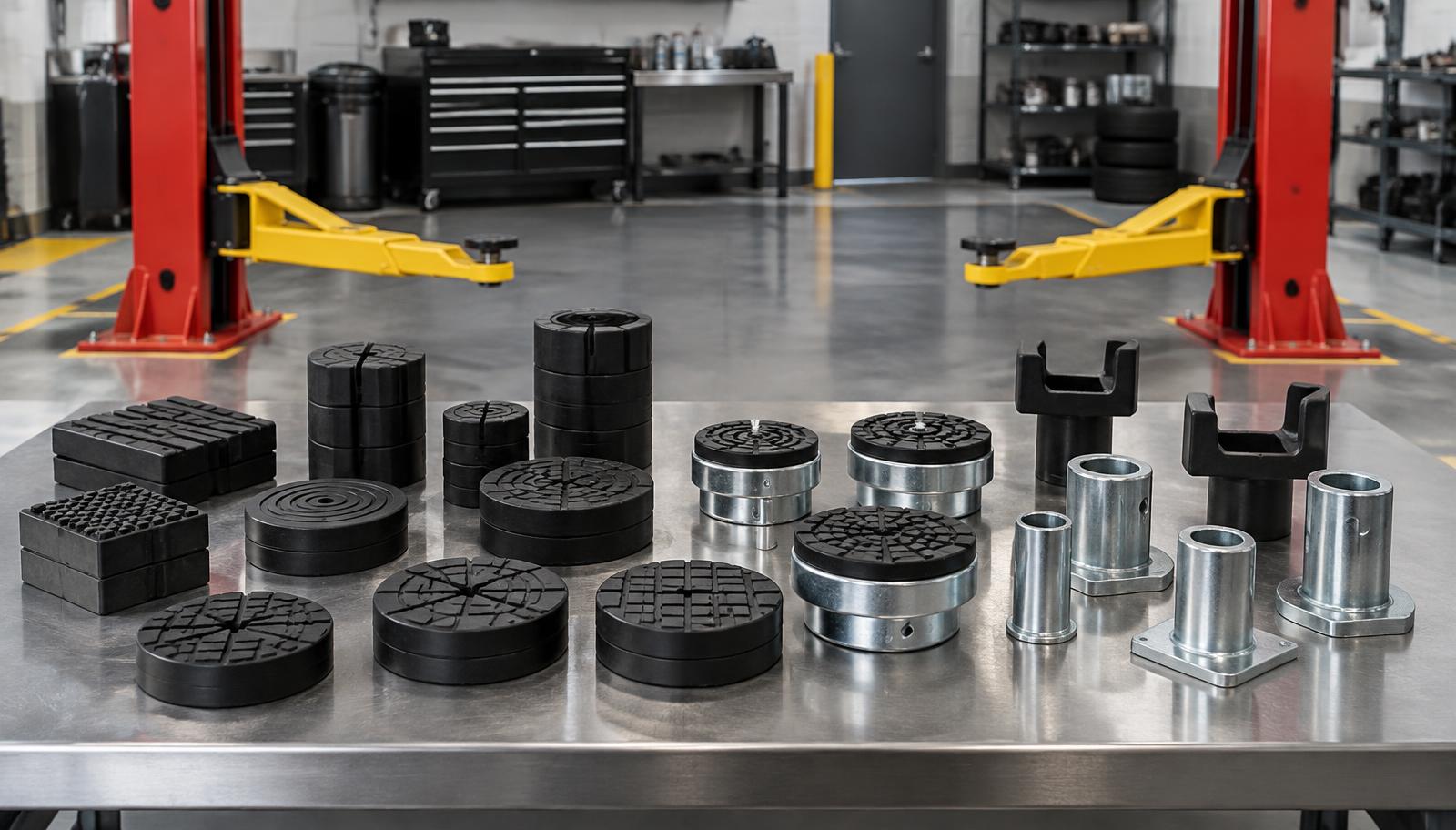
Selecting Rotary lift pads starts with the lift's exact model and the hardware currently installed. Rotary has produced multiple lift families and contact arrangements, so brand recognition alone cannot establish fit. Record the data plate, consult the matching manual, identify whether the arm uses a drop-in, spin-up, bolt-on, slip-on, or other approved assembly, and measure the complete connection. That evidence narrows the catalog without implying that visually similar parts are interchangeable.
Key takeaways: Confirm the complete Rotary model and serial number. Document every arm position. Match the mount before the rubber shape. Measure pins with a caliper. Compare the present hardware with the manual and product listing. Call 888-588-9555 when any fitment detail remains uncertain.
Which Rotary lift pads fit your equipment?
The correct pads are the parts documented for the lift model, production configuration, arm design, and contact assembly. The badge on the column tells you the manufacturer, but not every detail needed to select a replacement. Model suffixes, serial ranges, previous service work, and front-versus-rear arm configurations can all affect what is installed.
Find the manufacturer data plate on the lift and photograph it clearly. Record the complete model, serial number, and capacity marking. Then open the corresponding operator or parts manual and locate the arm and pad diagram. If the plate is missing or unreadable, contact Rotary or an authorized source rather than identifying the machine from appearance alone.
The Rotary lift parts catalog provides a useful brand-level starting point. Its product groupings can narrow the search after the exact lift has been identified, but the manual and physical interface remain the final fitment checks.
How should you document the current pad configuration?
Photograph each pad while it is still installed. Capture the top, profile, underside, attachment point, arm position, and any molded or stamped number. A complete set of photographs can reveal whether the lift has matching contacts or whether earlier repairs introduced a different assembly at one position.
Next, identify what is being replaced. The worn item might be only a molded rubber surface, a drop-in contact with an integral pin, a threaded spin-up assembly, or rubber attached to a larger adapter. Treat the metal beneath the rubber as part of the inspection. Loose carriers, damaged threads, enlarged holes, bent pins, and corroded plates require the manufacturer's service guidance.
Do not discard the old components until the replacement has been positively identified. Label removed parts by arm position and keep associated hardware together. Never reuse or substitute fasteners unless the service instructions permit it.
Why does the mounting style matter?
The mount is the mechanical interface with the arm, and it must match precisely. Two pad tops can share a diameter yet use different pins, threads, plates, or retention methods. Choosing by the visible rubber alone overlooks the feature that holds the part in place.
If the lift uses a drop-in design, inspect the pin and receiving hole. The drop-in lift pad category tells shoppers to measure pin diameter with a caliper rather than a ruler. Record the usable pin length, shoulders, steps, and overall assembly height as separate dimensions.
For a threaded design, identify the documented thread specification and measure the rod diameter, threaded length, minimum assembly height, and contact top. For bolt-on rubber, count holes and measure their center-to-center pattern. Do not force a thread, elongate a hole, grind a pin, or add an improvised shim to make a near match fit.
What dimensions should you verify?
Build a measurement profile instead of relying on one headline dimension. For round contact surfaces, record diameter. For square or rectangular surfaces, record both directions. Add rubber thickness, complete assembly height, pin or threaded-rod dimensions, bolt pattern, recesses, steps, and any top features.
Use the right tool for the feature. A caliper is appropriate for close pin and rod diameters; a steel rule or tape may be sufficient for larger top dimensions. Label every number with its unit. Take several readings where wear could have made a circular part oval or compressed one edge of the rubber.
Compare the measurements with the current manual and candidate product description. If the old rubber is torn or compressed, use unworn metal features and documented specifications as references. A deformed old pad should not become the template for a new one.
When is a rubber kit the appropriate choice?
A rubber kit may be suitable when the existing metal adapters are correct, serviceable, and designed to accept replacement rubber. It can also help a shop refresh multiple contact surfaces as a coordinated maintenance task. It does not automatically replace a damaged carrier, pin, thread, or arm component.
Pads4Lifts lists bundled options in the rubber lift pad kits collection, and those kits ship free within the contiguous United States. Confirm the product's stated lift application, quantity, rubber dimensions, and attachment method before ordering. Free shipping is a delivery benefit, not a compatibility indicator.
If only one surface appears damaged, inspect every lift contact before deciding the repair scope. Uneven wear can point to setup, contamination, arm, or maintenance issues that a single new pad will not address. Follow Rotary's inspection and replacement guidance.
How do you compare a candidate part?
Use a one-line comparison for every field. Put the lift manual specification, measured existing part, and candidate listing beside one another. Mark each field as matched, unmatched, or unknown.
- Confirm the lift make, complete model, serial information, and relevant arm position.
- Confirm the contact type and the way it attaches to the arm.
- Compare pin, thread, or bolt-pattern measurements.
- Compare top shape, length and width or diameter, rubber thickness, and total height.
- Review stated fitment, included quantity, and any notes in the listing.
- Resolve every unknown with documentation or direct support before purchase.
This method prevents one matching detail from overshadowing a conflict elsewhere. A matching diameter does not make a different pin length acceptable, and a matching model name does not explain undocumented hardware installed during a previous repair.
What should technicians inspect before each lift?
Before positioning a vehicle, inspect the pads and adapters for missing rubber, cracks, separation, contamination, looseness, deformation, and incomplete engagement. Check moving and threaded parts as the lift manual directs. Remove questionable equipment from service rather than testing it under a vehicle.
Position each pad only at a lift point approved by the vehicle manufacturer. Verify that arms, restraints, adapters, and contacts are arranged according to the lift instructions, then perform the prescribed stability checks before raising to working height. Capacity and setup rules in the equipment manuals always take priority over general purchasing guidance.
Keep the contact surfaces clean and store removable pieces so matched sets are not mixed between lifts. A simple bay label and inspection record can prevent a correct adapter from being placed on the wrong machine.
Which common mistakes should you avoid?
Ordering "a Rotary pad" without the model is the most common mistake. Others include measuring with the pad installed at an angle, using a ruler for a close pin dimension, reporting only the rubber diameter, and omitting a model suffix or arm position.
Another mistake is assuming a previous part is original. A used lift may have been repaired with a different carrier or adapter. Compare what is physically present with the model's documentation and ask why they differ before buying a replacement.
Do not mix contact heights, stack loose blocks, combine unapproved components, or modify a part to fit. These shortcuts can change how the vehicle is supported. Follow the lift and vehicle manufacturers' manuals and all applicable workplace safety requirements.
What information should you send for fitment help?
Prepare the data plate photo, lift model, arm position, mounting style, measurements with units, existing part numbers, and clear photos of the top and underside. Explain whether you need rubber only or the complete contact assembly. This package gives support staff evidence they can compare with catalog records.
If a product listing and your notes disagree, do not select the closest option. Call Pads4Lifts at 888-588-9555 during support hours, Monday through Friday, 8:00 a.m. to 6:00 p.m. EST.
Select Rotary parts with a repeatable process
The safest way to narrow Rotary lift pads is to identify the exact lift, document the current configuration, measure the mounting interface, and compare every candidate field by field. Shape and brand help organize the search, but the connection, dimensions, stated fitment, and manufacturer documentation decide it. A repeatable record also makes future inspections and replacements faster for the whole shop.
Frequently Asked Questions
How do I find my Rotary lift's exact model number?
Check the manufacturer data plate on the lift column or base and compare the complete model and serial information with the matching manual.
Can I mix pad styles on the same Rotary lift?
Use only contact arrangements approved for the exact lift. Do not mix heights, mounts, or unapproved components to compensate for a fitment problem.
What is the difference between a drop-in pad and a rubber kit?
A drop-in pad includes a pin or sleeve interface, while a rubber kit replaces contact rubber on compatible, serviceable hardware. Check each product's contents and mounting details.
Should I replace one Rotary pad or the complete set?
Inspect every position and follow Rotary's service guidance. The correct repair scope depends on wear, hardware condition, and whether positions use identical parts.
Still need help finding the right lift part?
Tell us your lift model and measurements. We will help you confirm the fit before you order.